Take time to reflect on the National Day for Truth and Reconciliation
Monday, September 28, 2026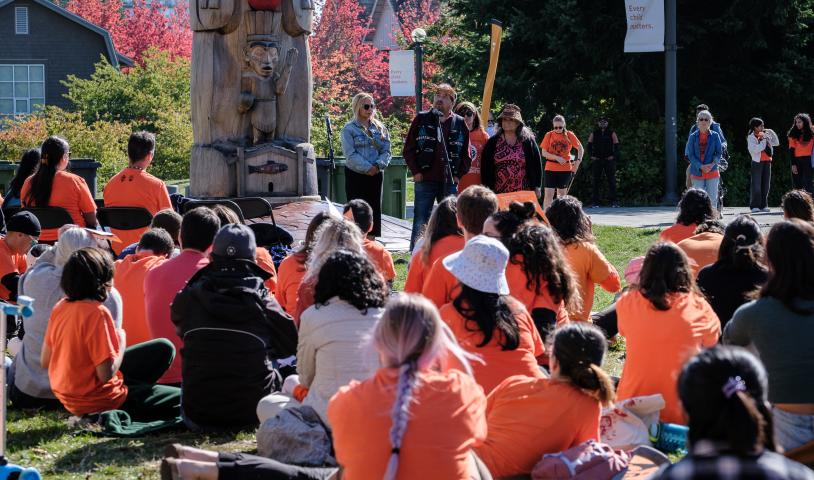
This Wednesday, September 30, is the National Day for Truth and Reconciliation, a day to remember and honour the victims and survivors of the Canadian residential school system.
We’re asking our supporters to mark this occasion, and reflect on the destructive legacy of the residential school system and how we can work to challenge colonial and racist systems and structures that remain in place today. Truth and reconciliation require grappling with Canada’s violent history and understanding how Indigenous people in this country continue to face barriers and oppression every day.
Here are some ways you can take action and support reconciliation on this Orange Shirt Day:
1. Support residential school survivors
If you’re in a position to support survivors directly, please make a donation to any organization that supports Residential School Survivors, including:
- National Centre for Truth and Reconciliation is building a place where the truths of their residential school experiences will be honoured and kept safe for future generations.
- Indian Residential School Survivors Society provides culturally sensitive services — including counselling, advocacy, and community outreach — to help individuals and communities reclaim strength and resilience.
- Legacy of Hope Foundation educates and raises awareness about the history and existing intergenerational impacts of the Residential School System and subsequent Sixties Scoop on Indigenous Survivors, their descendants and their communities to promote healing and reconciliation.
2. Donate One Day’s Pay to Indigenous organizations
Each National Day for Truth and Reconciliation, people across the country donate their pay from the statutory holiday to Indigenous organizations. In the last five years, One Day’s Pay has raised over a million dollars for Indigenous-led initiatives. This year the campaign is supporting three organizations:
- Sacred Earth advances a just transition: moving towards climate solutions that center Indigenous rights, cultural resilience, healing from colonization and ecological balance for human and non-human kin.
- Clan Mothers Healing Village & Knowledge Centre provides long-term, land-based healing programs for Indigenous women and two-spirit relatives who suffer from multigenerational systemic trauma, violence, sexual exploitation and trafficking.
- Stqeeye’ Learning Society restores and protects the waters of Xwaaqw’um, a traditional Quw’utsun village site on Salt Spring Island, while revitalizing Indigenous knowledge, culture, and stewardship.
3. Read the Calls to Action of the Truth and Reconciliation Commission of Canada
Please also take some time to familiarize or re-familiarize yourself with the Truth and Reconciliation Commissions 94 Calls to Action or order copies of the booklet to give to people in your life.
4. Find a National Day for Truth and Reconciliation event near you
Search your community event listings and local institutions for a way to honour residential school survivors together and commit to reconciliation with Indigenous Peoples.
Truth and Reconciliation in 2026
This year’s Orange Shirt Day comes at a moment when the advancement of First Nations, Inuit and Métis rights is facing backlash. In particular, the return of land to Indigenous Peoples through government legislation, negotiations and court decisions meets vocal opposition that often veers into fear-mongering and racism. This fear-based response ranges from harmful hate speech on social media platforms to the statements and policies of major political parties across the country.
Unfortunately, we’re seeing governments in Canada start to capitulate to these regressive attitudes. B.C. is faltering in its commitment to legislation that enshrines Indigenous rights. The federal government and several provinces have passed legislation to bring in weakened and rushed assessment processes for industrial development that don’t allow for proper consultation with — let alone consent from — Indigenous communities.
We must acknowledge the connection between Indigenous Peoples and the lands, waters and non-human species here, and recognize that reconciling Canada’s colonial history means doing everything we can to not repeat and continue it.
We all have a role to play, on September 30 and every day, to confront and challenge attitudes that ignore or downplay the harmful and ongoing impacts of colonialism here in Canada.