New federal nature strategy heavy on economy, light on biodiversity
Wednesday, April 1, 2026
Analysis reveals new A Force of Nature strategy adapts conservation to fit around industrial needs
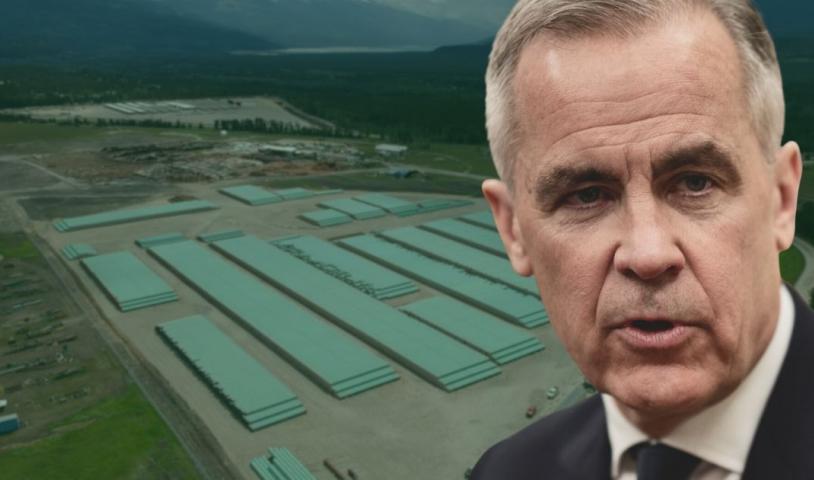
VANCOUVER / UNCEDED xʷməθkʷəy̓əm, Sḵwx̱wú7mesh AND səlilwətaɬ TERRITORIES — The Wilderness Committee is criticizing the federal government’s new nature strategy as an effort to fit conservation commitments into Prime Minister Mark Carney’s larger push to fast-track resource extraction and large industrial developments.
The organization says the Carney government is reframing conservation as another market issue instead of focusing on meeting Canada’s commitments under the Kunming-Montreal Global Biodiversity Framework.
“While Prime Minister Mark Carney might think yesterday was a good day for polar bears, the rest of the year will continue to be good days for private investors and extractive industries,” Conservation and Policy Campaigner Lucero Gonzalez said.
“Polar bears and the rest of the 5,000 species at risk in Canada need intact ecosystems. They need, and are still waiting, for real action beyond a 15-page nature strategy from this government,” she added.
“More” money, but fewer resources
The Wilderness Committee welcomes the $1.5 billion increase in Enhanced Nature Legacy for Canada funding to $3.8 billion over five years but cautions it fails to offset a 188 per cent increase in species at risk over the last decade.
A deeper analysis reveals a hollowed-out system:
- Departmental cuts: The 2025 federal budget slashed 2026-27 funding for Environment and Climate Change Canada by $1.4 billion (down 45 per cent compared to 2025-26) and for the Department of Fisheries and Oceans by $4.3 billion (down 69 per cent compared to 2025-26).
- Stalled salmon recovery strategy: The Pacific Salmon Strategy will receive $412 million over the next five years, but this is a 30 per cent reduction from $647 million for 2021-2026.
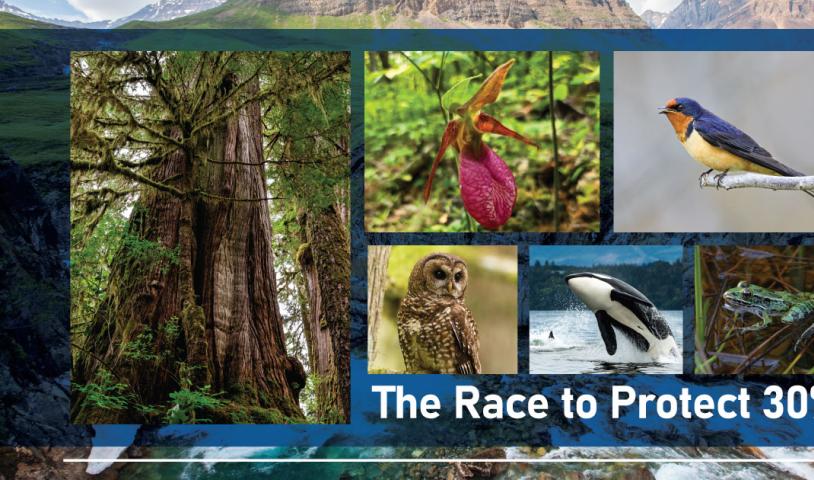
- 30x30 missteps: Reduced funding and layoffs in under-resourced agencies raises doubts over protecting 30 per cent of lands and waters by 2030, while simultaneously attempting to increase resource extraction and large industrial projects.
“Today’s funding comes in the wake of huge cuts to the departments responsible for protecting nature and the Prime Minister's push to fast-track resource extraction and megaprojects across the country through legislation like the Build Canada Act,” Associate Director Torrance Coste said. “We are still destroying biodiversity and the habitat of species at risk faster than we’re protecting it. No amount of dollars will be able to bring back an extinct species.”
Nature as a tool for industry
A Force of Nature shifts the focus from halting the biodiversity crisis to supporting “nature based sectors”, reframing protection as a means to support the federal government’s push for resource extraction.
This is seen in:
- Permit acceleration: The strategy commits to mapping biodiversity hotspots specifically to "accelerate permitting" and provide data to project proponents, rather than to restrict development. Explicitly mentioned is the use of AI to do this work, a route the Wilderness Committee says ignores the environmental consequences of AI and adds accuracy risks.
- The OECM red flag: The strategy aims to designate nearly 8 per cent of Canada — almost half of the new protected areas goal — as Other Effective Conservation Measures (OECMs). Concerningly, this designation still allows harmful industrial activity (like logging in B.C.) and could be used as a way to “increase” protected lands by not committing to real protections.
- Emphasis on market mechanisms, outside capital: The strategy focuses on protecting nature as an economic opportunity with potential for investment and the ability to capitalize on ecosystem services, rather than as a vital imperative for our health and wellbeing. One of the strategy’s three pillars is a taskforce to look into ways to “mobilize capital” and find financing tools for conservation, with zero additional detail given.
- No connection between human health and nature: The strategy fails to mention the essential connection between healthier people brought on by nature in our world, and the affordability increase that comes from lower health care costs
“We don’t protect nature because it’s a business case, or because of employment. Market capital is a horrible way to look at nature, our only life support system,” Wilderness and Water Campaigner Eric Reder said. “Hoping for ideas from a task force in the future as one of the three pillars your strategy, frankly, looks like a rushed job, perhaps to quell the anger over Carney’s devastating cuts and backsliding on the environment and climate change.”
The Wilderness Committee is warning that the recommitment to 30x30 and this week’s funding package, while positive, are jeopardized by the actions taken to date by the Carney government. The organization says that cuts to research in particular announced in the 2025 budget have set a lot of necessary work behind, and don't reflect the serious, whole-of-government approach the biodiversity crisis requires.
The Wilderness Committee will continue to work with Indigenous communities, scientists and experts and local organizations to call for protection in the most ecologically at-risk areas and to halt the massive surge of extractivism in Canada at the expense of biodiversity.
Additional resources: Read the Wilderness Committee’s 2026 report on progress towards 30x30 in Canada.
-30-
For more information please contact:
Lucero Gonzalez | Conservation and Policy Campaigner
lucero@wildernesscommittee.org
Eric Reder | Wilderness and Water Campaigner
eric@wildernesscommittee.org
Torrance Coste | Associate Director
torrance@wildernesscommittee.org